How Much Protein Do I Need to Eat?
A simple, practical guide to setting a protein target that supports strength, recovery, and body composition without overcomplicating your diet.
Read Protein Guide →Nutritional principles built for muscular recovery, body composition, and sustained energy without obsessive micro-management.
Start with these foundations before exploring more specific nutritional frameworks.
A simple, practical guide to setting a protein target that supports strength, recovery, and body composition without overcomplicating your diet.
Read Protein Guide →
How much you need to eat to achieve your goals.
Coming soon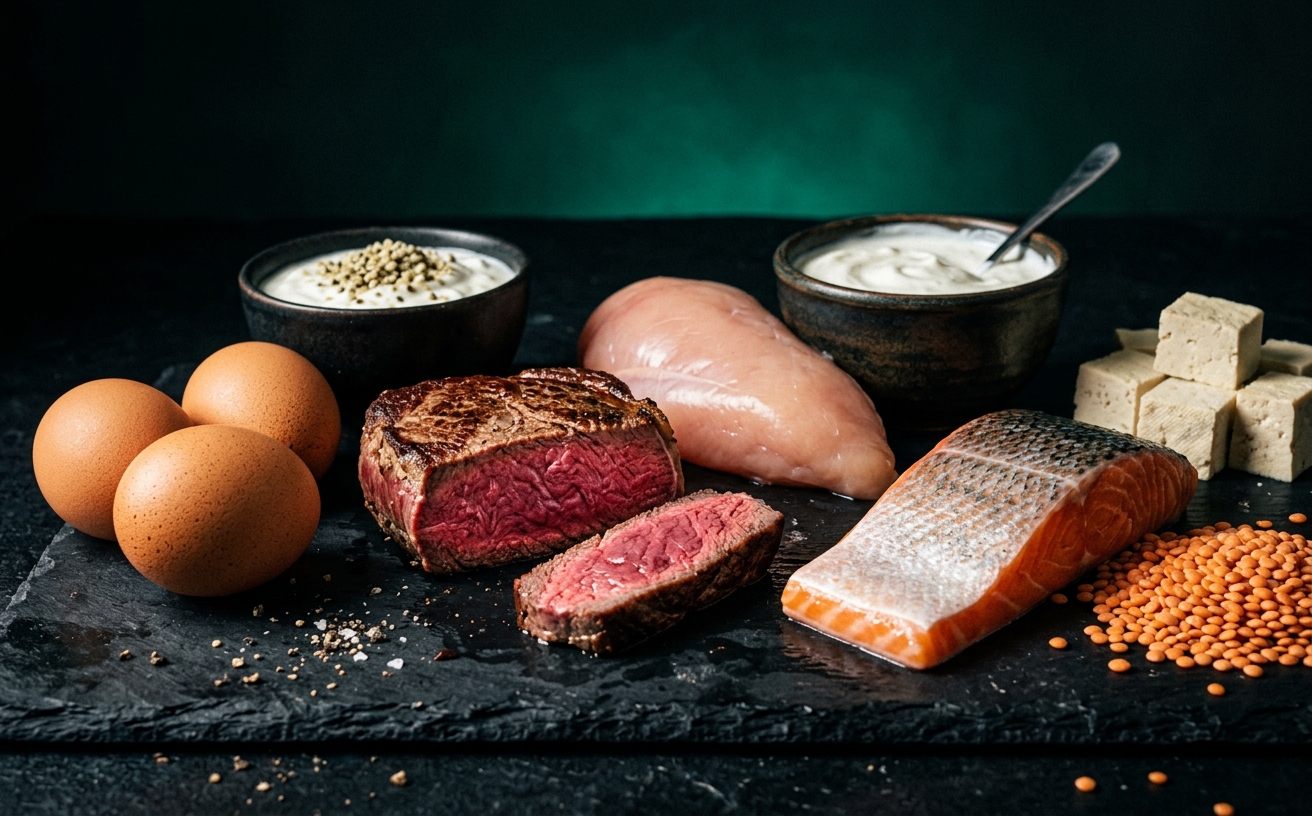
The best foods you can eat to hit those protein targets. For all dietary preferences.
Coming soonEvidence-grounded daily intake ranges calculated per kilogram of total body weight.
| Training Phase | Protein (g/kg) | Protein (g/lb) | Dietary Fats | Carbohydrates | Caloric Balance |
|---|---|---|---|---|---|
| Maintenance | 1.8 – 2.2 | 0.8 – 1.0 | 0.7 – 1.0 g/kg | Balance of total daily energy | TDEE Equivalence |
| Fat Loss (Deficit) | 2.2 – 2.6 | 1.0 – 1.2 | 0.6 – 0.8 g/kg | Centred around training windows | 300 – 500 kcal deficit |
| Hypertrophy (Surplus) | 1.8 – 2.2 | 0.8 – 1.0 | 0.8 – 1.1 g/kg | High — to fuel glycogen stores | 200 – 350 kcal surplus |
Chicken breast, 5% extra-lean minced beef, and tuna. Complete protein (amino acids) profiles, great for most people.
Coming soonConvenient zero-cook protein staples packed with casein and micronutrients. Great for high-satiety evening snacks and morning meals.
Coming soonHigh-fibre, versatile plant sources that supply essential micronutrients and steady energy without heavy digestive load.
Coming soonThe only two fitness supplements backed by decades of gold-standard randomised clinical trials.
Coming soon